Getaway Crew Co-op Partner Teamwork
One robber, one driver, short callouts—and fewer busts from mixed signals.
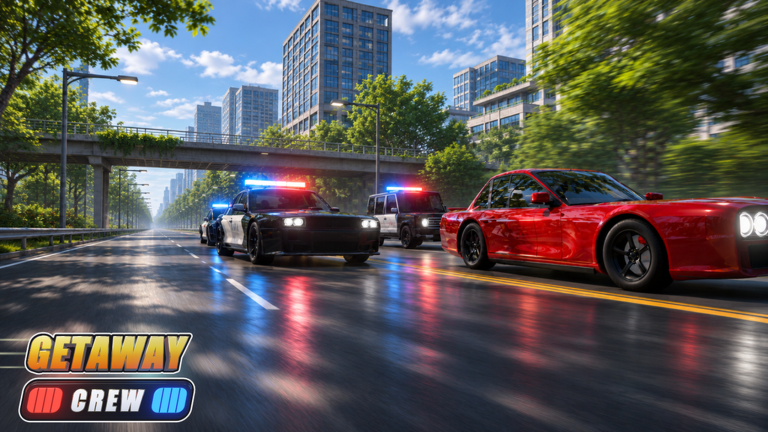
Getaway Crew is built for solo or partner play. Duo runs can be faster and more fun, but only when roles are clear. This guide covers driver versus robber jobs, communication, and a healthy split-loot mindset so partnership multiplies skill instead of multiplying chaos. Solo fundamentals still matter—skim Getting Started and the Players Hub before you treat every wipe as your teammate’s fault.
Why duo fails more than it should
Most partner wipes are social, not mechanical:
- Nobody agreed who drives.
- Both players give steering advice during the chase.
- The robber lingers while the driver has no plan.
- Loot arguments start before the criminal base.
Fix the social layer first; then your garage and routes can shine (Vehicle Upgrades, Escape Police).
Core roles
Robber
- Owns the bank phase timing and securing the score.
- Loads into the getaway immediately after “secured.”
- On the road, calls hazards and base approach cues—does not fight the wheel.
- Studies Bank Heist until the interior is muscle memory.
Driver
- Pre-aims the car for the exit.
- Starts the escape the instant the crew is loaded.
- Owns Route A and Route B decisions mid-chase.
- Invests mentally (and with Cash) in handling and acceleration parts that match the corridor—Vehicle Upgrades.
Swap roles between sessions so both players understand pressure. Permanent one-tricks are fine only if both consent.
Pre-heist checklist (60 seconds)
- Who is robber? Who is driver?
- Which car are we taking?
- What is Route A?
- What is the backup if Route A is dirty?
- Any codes to redeem for shared progress? — Codes
- Graphics readable for both? (5+ recommended)
If you cannot answer these, you are not ready to queue a “serious” duo attempt.
Callout language that stays short
Agree on a tiny vocabulary:
- In — robber committed to the bank.
- Secured — score is done.
- Loaded — both in the car.
- Left / Right / Hold — driving cues only when needed.
- Base — final approach.
- Reset — accept the bust and go again without blame essays.
Ban mid-chase debates about tier lists. Save Vehicles talk for the lobby.
Split-loot mindset
Partnership dies when every Cash tick becomes a scoreboard fight. Use a simple rule set:
- Session goal first. Agree whether tonight is drills, Cash farming, or route learning.
- Share upgrade intent. “Next purchase is handling for the shared car” beats silent resentment.
- Alternate perks. If one player desperately wants a cosmetic after the car is stable, schedule it.
- No hostage looting. Do not sabotage runs to “teach a lesson.”
- Celebrate arrivals. The criminal base is the win; argue later if you must.
Duo progress is fastest when both feel the garage moving forward—see also playstyle goals on Players.
Bank phase teamwork
- Driver stays with the car unless you have a practiced exception.
- Robber keeps the interior short; lingering steals chase margin (Bank Heist).
- If something goes wrong inside, call Reset early instead of forcing a doomed exit.
Chase phase teamwork
- Driver drives.
- Robber spot-calls only.
- Stick to Route A until it fails for a clear reason.
- If the car is underpowered for the line, simplify the route or buy the next part—do not invent hero paths every wipe (Escape Police).
Practice plans for pairs
Night A — roles locked
Ten runs, same robber/driver, same car, same Route A. Track arrival rate.
Night B — role swap
Same plan with roles reversed. Empathy improves callouts overnight.
Night C — upgrade test
Buy one part (Vehicle Upgrades), then five controlled runs to feel the difference.
Night D — pressure
Full focus on base arrivals only. No experimental cars.
Common duo failure modes
- Two drivers, zero plan. Fix: lock roles before approach.
- Backseat steering. Fix: robber limited to hazard calls.
- Loot first, teamwork second. Fix: split-loot rules above.
- Different skill goals. Fix: align on Players Hub targets for the session.
- Ignoring codes and shared Cash. Fix: Codes at session start.
- Patch blindness. Fix: skim Updates when the game suddenly “feels wrong.”
When to play solo instead
Duo is optional. Return to solo when:
- You need to relearn the bank without social noise.
- You are tilting at each other.
- You want pure driving reps on a new part.
Solo mastery makes you a better partner later—Getting Started and Escape Police still apply.
Linking duo play to the rest of the wiki
- Robbery timing — Bank Heist
- Chase routes — Escape Police
- Garage spending — Vehicle Upgrades
- Meta picks — Tier List Hub
- Playstyle goals — Players Hub
- All tutorials — Guides Hub
Session-ending review (2 minutes)
Ask only four questions:
- Did we keep roles?
- Were callouts short?
- Did Route A get better or did we abandon it too early?
- What is the single next upgrade or drill?
Write the answer once. Queue again.
Partnership in Getaway Crew is a rhythm: secure, load, drive, arrive. When both players hear the same beat, the criminal base stops feeling like luck.
Frequently Asked Questions
Quick answers to the most common questions.
What are the main duo roles in Getaway Crew?
One player focuses on robbing the bank while the other drives the getaway and owns the escape route to the criminal base.
How should partners communicate during a chase?
Keep callouts tiny—loaded, left/right/hold, base, reset. The driver steers; the robber should not backseat every turn.
How do we avoid loot drama?
Agree on the session goal and next shared upgrade before the heist. Treat base arrivals as the win and schedule cosmetics after the car is stable.
Should both players learn both roles?
Yes. Swap robber and driver between sessions so each person understands bank timing and chase pressure.
When should a duo switch back to solo practice?
When communication tilts, when bank timing falls apart, or when you need clean reps to test a new vehicle part.